Episode 98 · February 22–March 28, 1862 · The Rio Grande valley and Santa Fe Trail, from Fort Craig through Albuquerque and Santa Fe to Fort Union and Apache Canyon, New Mexico Territory
SIBLEY'S NEW MEXICO CAMPAIGN (Part the Third)
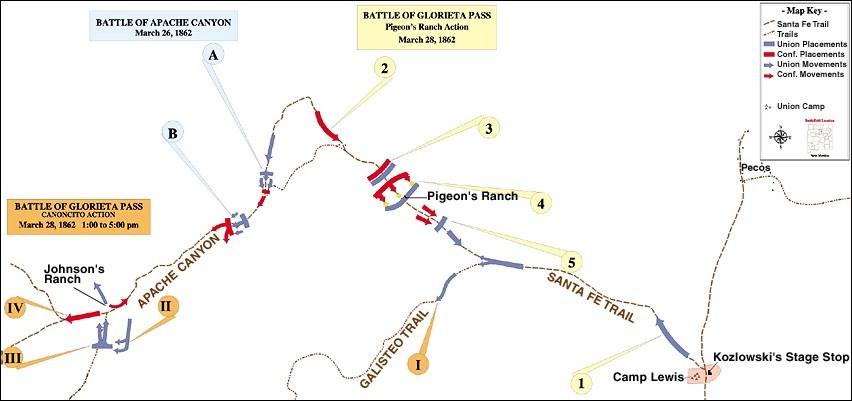
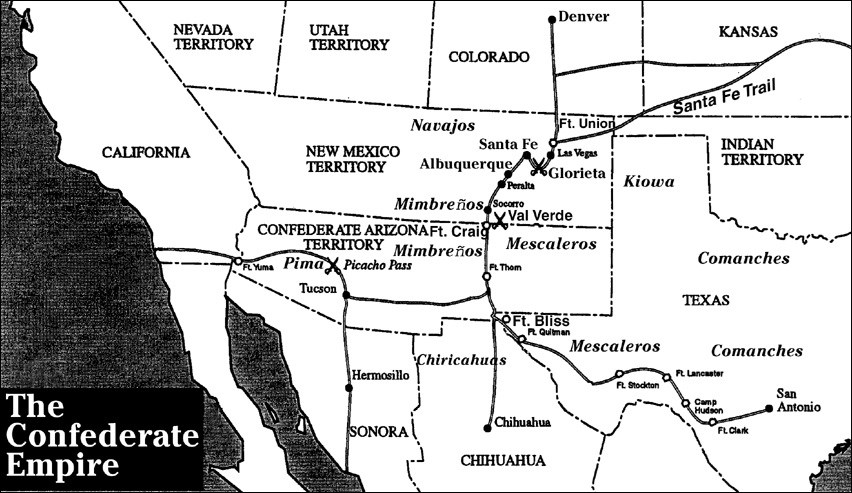
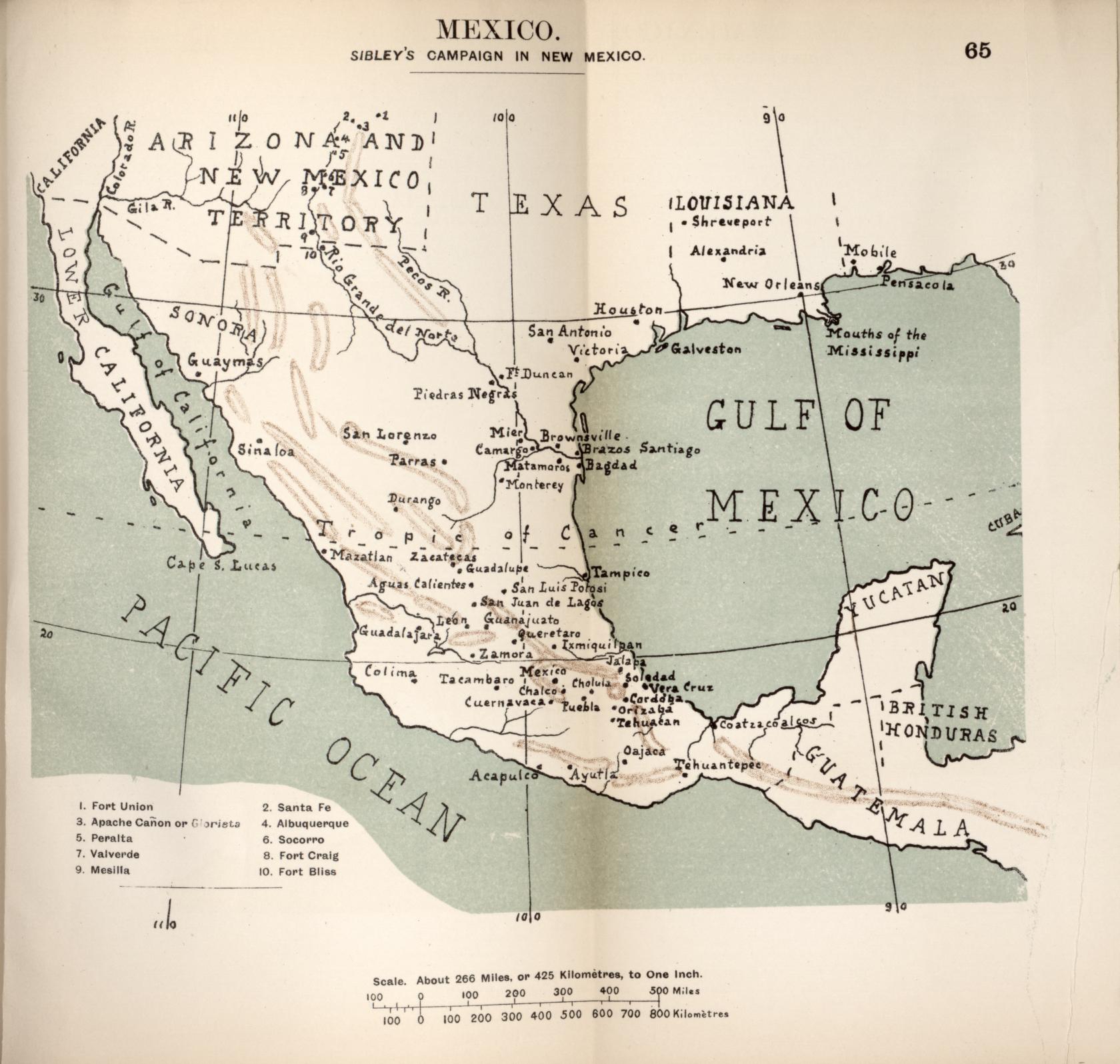
Henry Sibley bypassed Fort Craig, occupied Albuquerque and Santa Fe, and sent troops toward Fort Union. The 1st Colorado Volunteers reached Fort Union before the Confederates. On March 26, John Chivington’s 418-man advance guard defeated Charles Pyron’s smaller force at Apache Canyon, captured about 70 Texans, and withdrew to await the main battleEpisode at a glance
Forces and losses
Reported figures retain the scope and estimates of the existing guide. They may cover different units or periods; missing breakdowns are not inferred.
| Scope | Reported figure |
|---|---|
| U.S. force left Fort Union | About 1,350 men on March 22 |
| Apache Canyon casualties stated in episode | U.S.: 5 killed, 14 wounded, 3 captured; Confederate: 3 killed, 1 wounded, 71 captured |
Source: Civil War Podcast episode 98 · National Park Service: Glorieta Pass teaching guide · National Park Service: Glorieta Pass battle summary · National Park Service: Fort Union · National Park Service: Second Fort Union · National Park Service: Civil War on El Camino Real · Library of Congress: Sibley’s campaign map · Library of Congress: Edward R. S. Canby portrait
Step by step
Episode flow
Follow the discussion in order. Reference maps show the setting; they do not plot positions for each step.
Step 1 of 23
Fort Craig remained in U.S. hands
The Confederate victory at Valverde did not capture the fort or its supplies. Canby still had a strong force behind the fortifications.
Maps
People and command
United States
Confederacy
Other people
- JPUnited States
John P. Slough
Commanded the 1st Colorado Volunteers and the U.S. field force that marched from Fort Union
- JMUnited States
John M. Chivington
Led the 418-man U.S. advance guard at Apache Canyon
- CLConfederacy
Charles L. Pyron
Occupied Albuquerque and Santa Fe, then commanded the Confederate force defeated at Apache Canyon
- WRConfederacy
William R. Scurry
Reinforced Pyron and took command before the main battle at Glorieta Pass
- GRUnited States
Gabriel R. Paul
Regular Army colonel responsible for Fort Union and its supplies
 United States
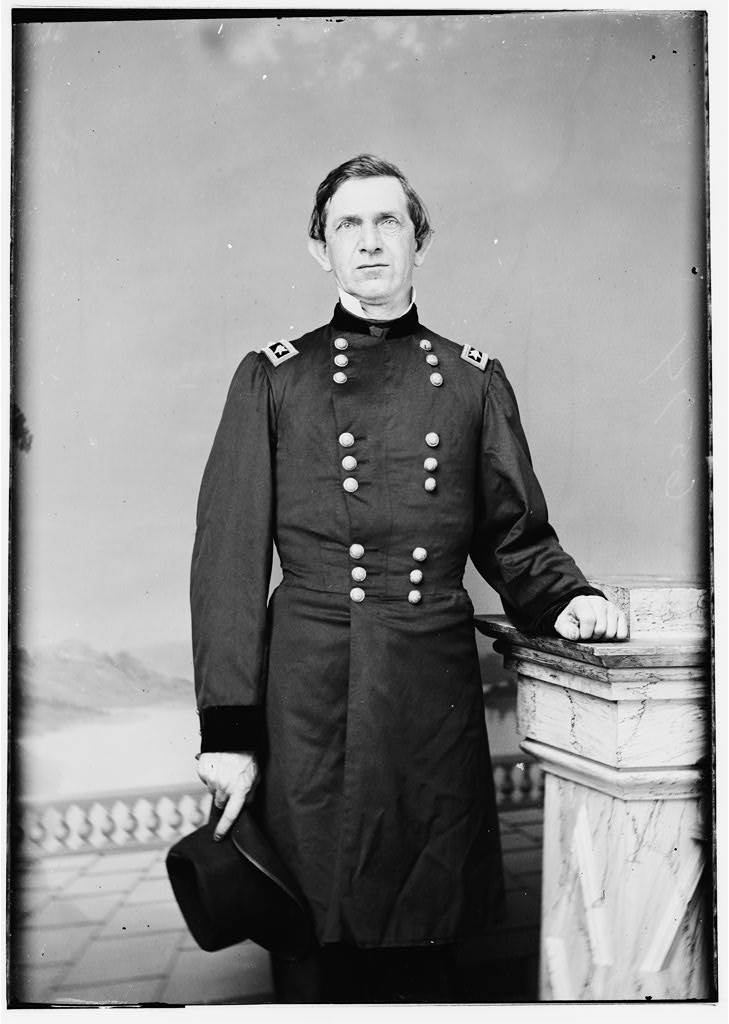
Edward R. S. Canby
Held Fort Craig and ordered supplies removed from Albuquerque and Santa Fe
- HHConfederacy
Henry H. Sibley
Directed the northward Confederate advance and remained at Albuquerque
- JHUnited States
James H. Carleton
Organized the California Column to advance east from Fort Yuma
Historical images
Sources and image credits
- Library of Congress: Edward R. S. Canby portrait
- Civil War Podcast episode 98
- National Park Service: Glorieta Pass teaching guide
- National Park Service: Glorieta Pass battle summary
- National Park Service: Fort Union
- National Park Service: Second Fort Union
- National Park Service: Civil War on El Camino Real
- Library of Congress: Sibley’s campaign map