Episode 102 · February 22–March 6, 1862 · Fayetteville, Elm Springs, Bentonville, Little Sugar Creek, and Pea Ridge in northwest Arkansas
PEA RIDGE (Part the Second)
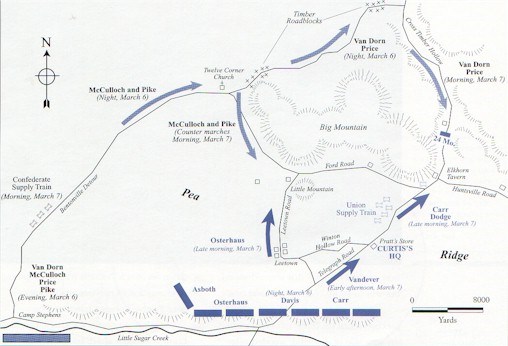
Van Dorn failed to trap Franz Sigel at Bentonville. Curtis concentrated the Army of the Southwest behind prepared defenses at Little Sugar Creek, but Van Dorn rejected a direct attack and ordered an overnight march around the United States right flank by the Bentonville DetourEpisode at a glance
Forces and losses
Reported figures retain the scope and estimates of the existing guide. They may cover different units or periods; missing breakdowns are not inferred.
| Scope | Reported figure |
|---|---|
| Sigel’s rear guard | About 600 men after the 2nd Missouri left Bentonville |
Source: Civil War Podcast episode 102 · National Park Service: The Pea Ridge Campaign · National Park Service: Bentonville Detour · National Park Service: Pea Ridge order of battle · National Park Service: Samuel R. Curtis · National Park Service: Earl Van Dorn · Library of Congress: Pea Ridge battlefield map · Library of Congress: Battle of Pea Ridge print
Step by step
Episode flow
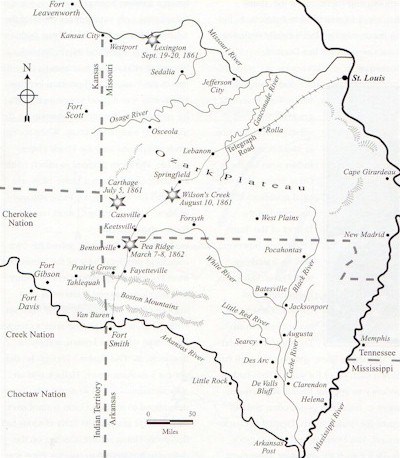
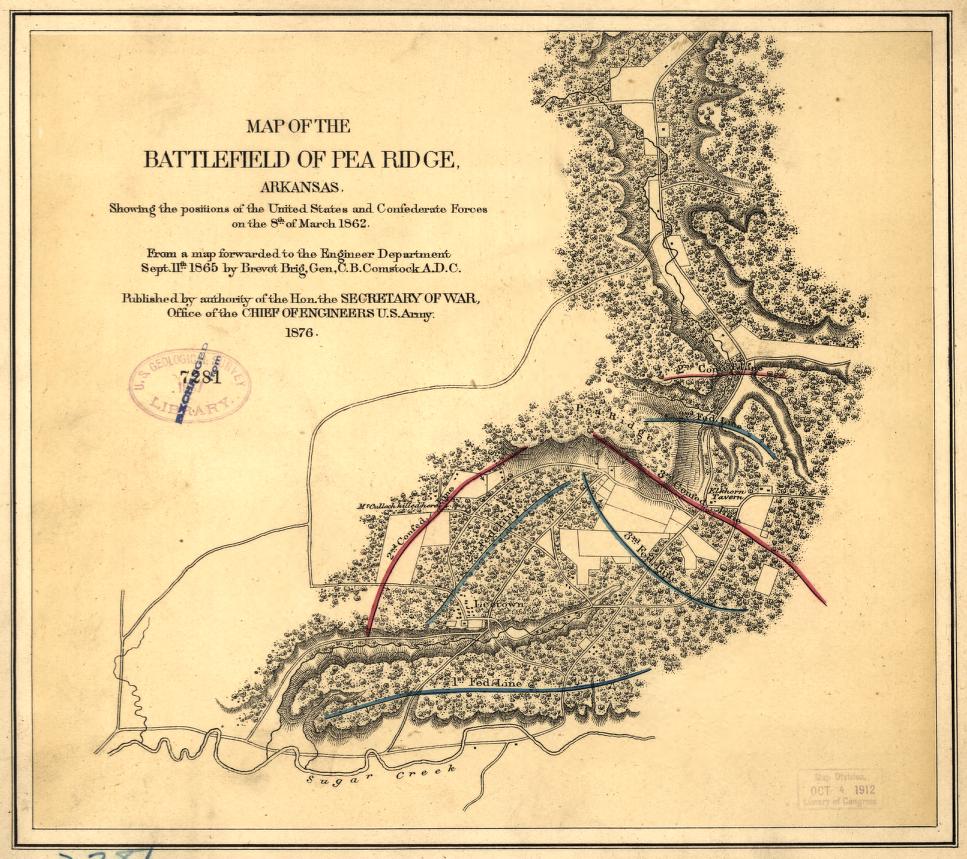
Follow the discussion in order. Reference maps show the setting; they do not plot positions for each step.
Step 1 of 26
Curtis held his position in northwest Arkansas
Curtis had driven Price out of Missouri. By March 1, he decided to remain in Arkansas, concentrate his divided army, and prepare for a Confederate advance.
Maps
People and command
United States
Confederacy
Other people
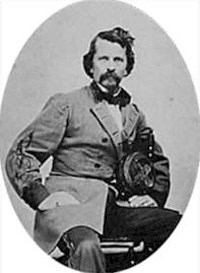 Confederacy
Earl Van Dorn
Ordered the rapid advance and the overnight envelopment by the Bentonville Detour
 United States
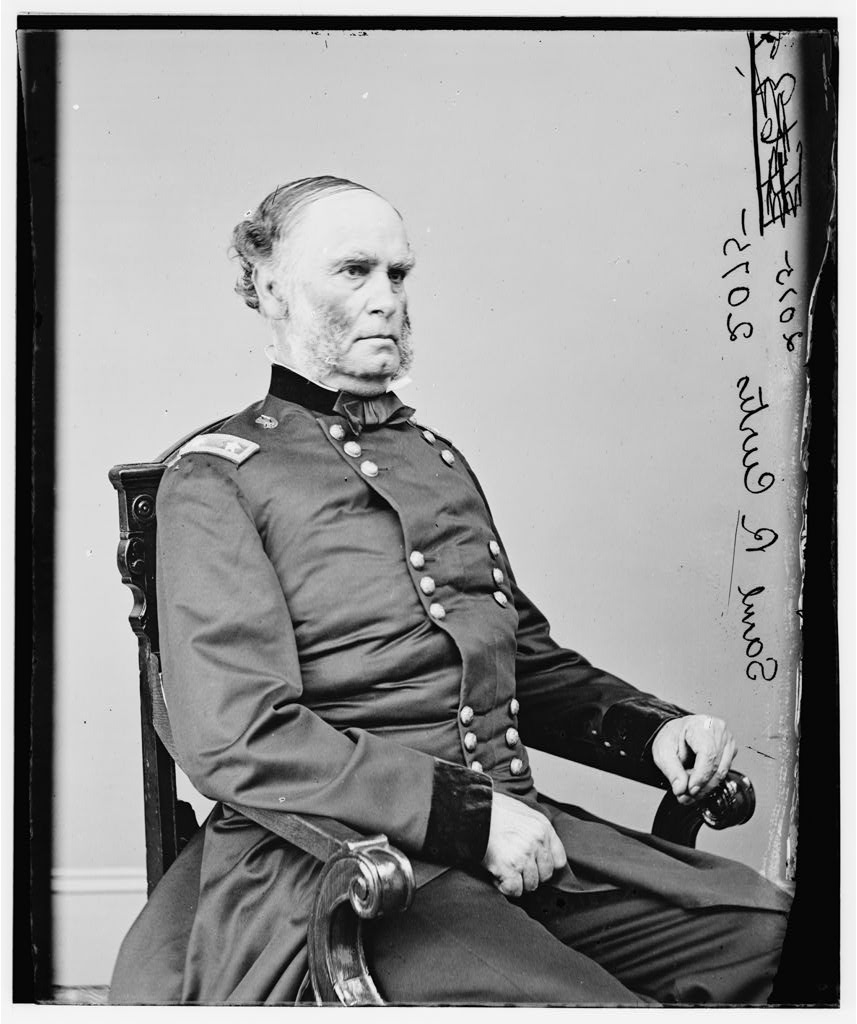
Samuel R. Curtis
Concentrated the Army of the Southwest at Little Sugar Creek and prepared the defensive position
 United States
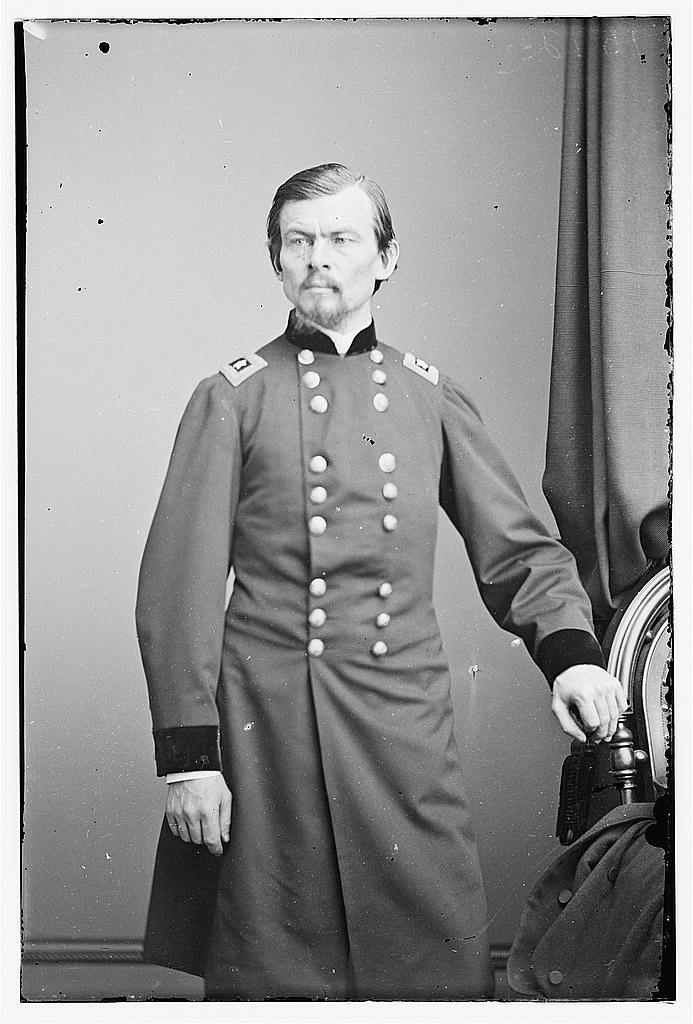
Franz Sigel
Withdrew the 1st and 2nd Divisions from Bentonville and conducted the final rear-guard action
- BMConfederacy
Benjamin McCulloch
Advised against a direct attack and proposed using the Bentonville Detour
- JMConfederacy
James McIntosh
Led Confederate cavalry around Bentonville but failed to cut off Sigel
- FSUnited States
Frederick Schaefer
Left the pickets that detected the Confederate advance on the Elm Springs Road
- WVUnited States
William Vandever
Led the last United States detachment into the Little Sugar Creek position
- APConfederacy
Albert Pike
Brought the Cherokee Mounted Rifles and Texas cavalry into Van Dorn’s army
Historical images
Sources and image credits
- National Park Service: Earl Van Dorn
- Portrait: Samuel R. Curtis
- Portrait: Franz Sigel
- Civil War Podcast episode 102
- National Park Service: The Pea Ridge Campaign
- National Park Service: Bentonville Detour
- National Park Service: Pea Ridge order of battle
- National Park Service: Samuel R. Curtis
- Library of Congress: Pea Ridge battlefield map
- Library of Congress: Battle of Pea Ridge print